Rear-end collisions are among the most common accident types on Las Vegas roads. Heavy freeway traffic on I-15 and US-95, dense commercial strip intersections on Sahara, Flamingo, and Eastern, and congested casino parking structures all create conditions where rear impacts happen regularly at a range of speeds. What many drivers do not realize is that the visible damage after a rear-end collision - a dented trunk lid, a cracked bumper fascia - often represents only a fraction of what actually happened structurally.
Why Rear-End Collision Damage Is Frequently Underestimated
The rear bumper system on a modern vehicle is engineered to absorb energy in a controlled sequence. When a rear impact occurs, the bumper fascia flexes or cracks, the energy absorber behind it crushes, and the bumper reinforcement bar deflects or deforms. Behind all of that, the trunk floor pan, rear frame rails, and subframe can be stressed, bent, or displaced depending on the speed and geometry of the impact.
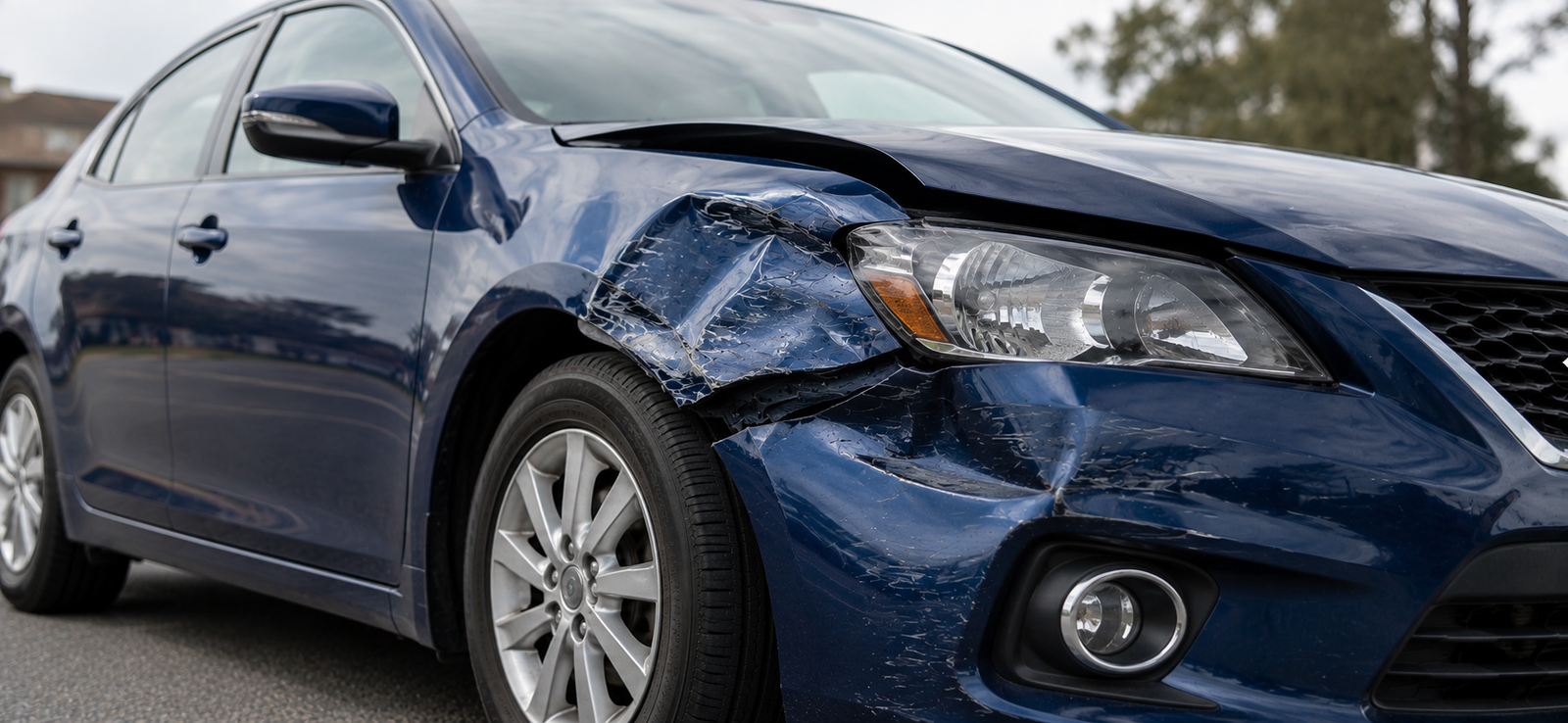
The problem is that the plastic bumper fascia can look nearly intact after an impact that has already crushed the energy absorber and stressed the rear frame rails. The outside tells you the impact occurred. It does not tell you how much energy transferred into the structure, or what happened to the components you cannot see.
The Most Common Hidden Damage After a Rear-End Collision
Crushed or Deformed Energy Absorber
The energy absorber (also called a foam core or impact absorber) sits between the bumper fascia and the reinforcement bar. It is a crushable component designed to absorb low-speed impact energy. Once crushed, it cannot absorb energy in a subsequent impact - but a damaged energy absorber behind an intact-looking fascia may not be obvious without removing the fascia.
Bent Bumper Reinforcement Bar
The reinforcement bar is a rigid structural element that spans the full width of the vehicle. In moderate to severe rear impacts, this bar can bend, bow, or be displaced. A bent reinforcement bar is not visible from the outside, but it means the vehicle's rear impact protection is compromised.
Trunk Floor Deformation
In higher-speed rear impacts, collision energy can travel past the bumper system and compress the trunk floor pan. Deformation of the trunk floor affects the vehicle's structural rigidity and can create long-term noise, water intrusion, and handling issues even if the vehicle is still drivable.
Rear Frame Rail Damage
The rear frame rails are the primary structural elements connecting the rear of the vehicle to the rest of the unibody. Any measurable deformation of the rear rails affects the vehicle's geometry - which changes tire alignment angles, affects how the vehicle handles, and compromises crash safety performance in future impacts.
Backup Camera and Sensor Misalignment
Backup cameras, rear parking sensors, and rear cross-traffic alert radar modules are mounted at precise positions in or on the rear bumper. A rear-end impact - even one that leaves the fascia looking intact - can physically displace these sensors. If your backup camera image looks different, your parking sensors are giving unexpected warnings, or your rear collision alert is behaving erratically after a rear impact, the sensors may need to be inspected and recalibrated.
Signs of Hidden Rear Collision Damage to Watch For
- Trunk or hatch that does not close or latch as smoothly as before
- Visible gaps around the trunk lid that are uneven or different from before
- Backup camera image that appears tilted or differently framed than before
- Parking sensor or rear cross-traffic alert errors after the impact
- Vehicle handling differently or pulling slightly when driving straight
- Unusual sounds from the rear of the vehicle when driving over bumps
- Fluid pooling under the rear of the vehicle after the accident
Why a Post-Collision Inspection Matters Even for Slow-Speed Impacts
Many Las Vegas drivers skip a professional inspection after a rear-end impact because the visible damage looks minor. Given how common hidden rear damage is after even moderate impacts, this is one of the most costly decisions in terms of long-term vehicle health. A free inspection that confirms the underlying components were not affected costs you nothing. The same inspection that identifies a crushed energy absorber or rear frame stress saves you from driving a vehicle that cannot protect you in the next impact.
Free Rear Collision Inspection in Las Vegas
Best Class Auto Body provides free estimates for rear collision damage that include inspection of all bumper components, frame measurement for rear rail integrity, and a check of backup cameras and sensors. We serve Las Vegas, Henderson, and North Las Vegas from our shop at 5267 E Cheyenne Ave. Call (702) 754-5408 or stop by for a walk-in estimate.
Related Services at Best Class Auto Body: