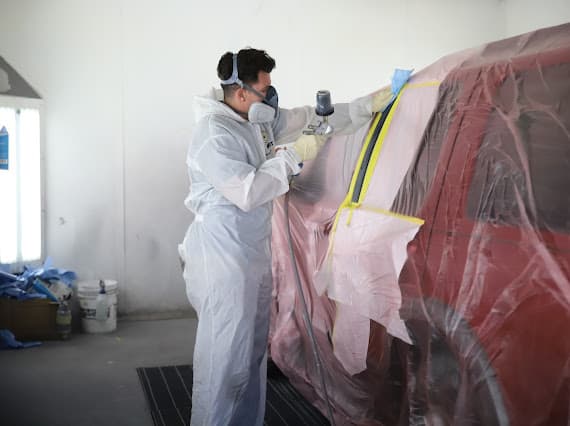
Las Vegas presents a combination of environmental stresses that very few vehicles anywhere in the country experience at the same intensity. High UV radiation, extreme summer temperatures, Mojave Desert dust, and near-constant construction debris create conditions that degrade a vehicle's exterior faster than almost any other North American city. For Las Vegas drivers, understanding exactly what is happening to your car's paint and trim is the first step toward doing something about it.
What Desert Dust Does to Automotive Paint
The dust that settles on a Las Vegas vehicle after a haboob or even a moderate wind event is not just ordinary dirt. Mojave Desert dust contains fine silica particles, mineral compounds, and construction fallout from the Las Vegas Valley's near-constant development activity. At the microscopic level, these particles are abrasive - the equivalent of very fine sandpaper.
When this dust is wiped away with a dry cloth or a poorly rinsed wash mitt, the particles drag across your clear coat and create fine swirl marks and micro-scratches. These are not always visible in overcast light, but in direct Las Vegas sunlight they appear as a dull, hazy webbing across the surface. Over time, these micro-scratches reduce the clear coat's UV resistance and allow oxidation to begin beneath the surface.
- Never wipe a dusty Las Vegas vehicle with a dry cloth - always rinse with water first to float the abrasive particles off the surface before any contact
- After a haboob or major dust event, a proper rinse-first wash within 24 hours prevents the particles from embedding further and being dragged across the paint when the vehicle heats up and re-cools
- Touchless or hand washes cause less swirl damage than automated brush washes, especially on paint that already has some UV degradation
What Extreme Heat Does to Clear Coat and Paint
The clear coat on a modern vehicle is a polymer-based film that is chemically engineered to withstand normal temperature ranges and UV exposure. Las Vegas summer conditions push well beyond what most automotive paint systems were specifically tested for. UV index readings regularly exceed 11 in the extreme range during summer, and surface temperatures on a dark-colored vehicle parked in direct sun can exceed 170 degrees Fahrenheit.
At these temperatures and UV levels, the polymers in the clear coat begin to break down chemically. The clear coat loses gloss, develops micro-cracks, and eventually begins to peel or flake in the most severe cases. Once the clear coat is compromised, the color layer beneath is exposed to UV and oxidizes - producing the chalky, faded appearance that is common on older Las Vegas vehicles.
How Desert Conditions Affect Plastic Trim and Bumpers
Plastic exterior components - bumper fascias, mirror housings, fender flares, door handles, and body cladding - are affected by sustained heat and UV exposure in a different way than painted metal. Plastics become progressively more brittle with UV exposure, losing the flexibility that allows them to absorb minor impacts without cracking. A bumper fascia on a three-year-old Las Vegas vehicle that has never been protected may crack from an impact that a newer plastic component would flex and recover from.
Rubber seals around windows and doors also dry out and crack under sustained desert heat. Once these seals fail, water can intrude into door panels and interior areas during the rare Las Vegas rainstorms that do occur - causing damage that is disproportionate to the small amount of precipitation Las Vegas receives.
Practical Protection Steps for Las Vegas Vehicles
- Park in covered or shaded locations whenever available - limiting direct UV and heat exposure is the single most effective protection step
- Apply a quality automotive wax or paint sealant every 90 days - this sacrificial layer absorbs UV before it reaches the clear coat
- Consider ceramic coating for multi-year UV resistance and hydrophobic protection that reduces how often contaminants bond to the paint surface
- Use a UV-protectant product on plastic trim and rubber seals to slow brittleness and cracking
- Rinse your vehicle within 24 hours after a dust storm - always rinse before any wiping contact with the surface
- Address paint chips and scratches promptly - in Las Vegas heat, exposed metal begins to rust significantly faster than in cooler climates
When Desert Damage Needs Professional Repair
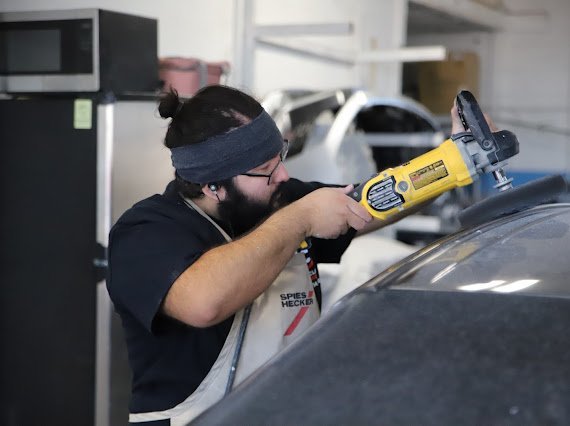
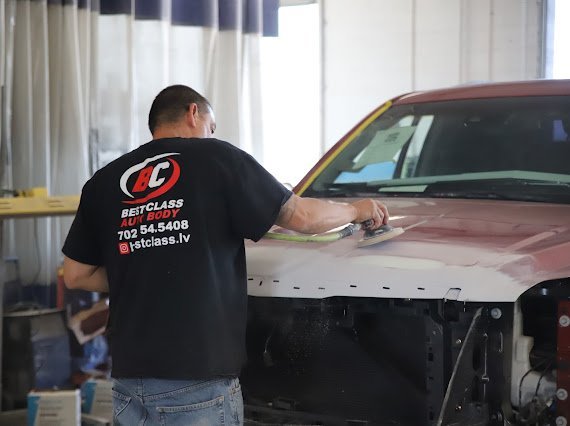
Some paint and trim degradation from desert conditions can be reversed with professional services. Light to moderate clear coat oxidation can often be corrected with machine polishing - a paint correction service that removes the degraded surface layer of clear coat and reveals fresher, glossier material beneath. More severe clear coat failure where the coat is already peeling or flaking may require panel refinishing. And rock chips from highway driving that have reached bare metal need professional attention before rust develops.
Best Class Auto Body offers free estimates for paint correction, scratch repair, rock chip treatment, and full panel refinishing. Our team serves Las Vegas, Henderson, and North Las Vegas from our shop at 5267 E Cheyenne Ave. Call (702) 754-5408 to schedule or stop by any time.
Related Services at Best Class Auto Body: