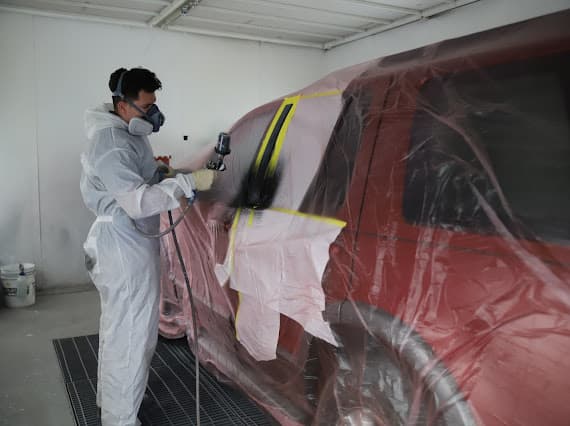
Few environments in the United States are as hard on a vehicle's exterior finish as the Las Vegas Valley. The combination of extreme ultraviolet radiation, summer surface temperatures that can exceed 170 degrees Fahrenheit, abrasive desert dust, and dramatic temperature swings between day and night creates conditions that degrade automotive paint systems faster than in nearly any other American city. Understanding exactly how each of these factors works helps Las Vegas drivers take the right protective steps - and recognize when damage has progressed to the point where professional repair is needed.
Ultraviolet Radiation: The Primary Paint Threat in Las Vegas
Las Vegas receives some of the highest levels of ultraviolet radiation in the continental United States. During summer months, daily UV index readings routinely reach the extreme category - above 11 - which is the highest level on the standard UV index scale. This level of UV exposure has a direct chemical effect on automotive clear coat. UV radiation breaks down the polymer chains that give clear coat its structure, transparency, and protective properties. As those chains degrade, the clear coat loses gloss, becomes hazy, and eventually begins to crack and separate from the color layer beneath it.
Extreme Heat and Thermal Cycling
High ambient temperatures compound UV damage in two ways. First, elevated temperatures accelerate the chemical reactions that break down clear coat polymers - heat is a catalyst for the same photodegradation that UV drives. Second, the large daily temperature swings in Las Vegas create what material scientists call thermal cycling. Paint expands in the afternoon heat and contracts in the cool overnight temperatures. Over hundreds of cycles, this repeated mechanical stress creates micro-cracks in the clear coat and eventually causes delamination between paint layers.
Desert Dust and Abrasion Damage
Las Vegas dust is physically abrasive. Fine silica particles from the Mojave Desert, mineral dust carried by wind events, and construction particulates from ongoing Las Vegas development settle on vehicle surfaces continuously. Every improper cleaning attempt - wiping a dusty surface with a dry cloth, using a dirty wash mitt, or running through a brush-style automatic wash - drags these particles across the clear coat surface, creating swirl marks and fine scratches that accumulate over time. The damage is gradual but cumulative, eventually reducing gloss and making the paint look dull and aged.
What Sun and Weather Damage Looks Like
- Loss of gloss: the paint surface appears dull or flat even after washing - an early sign of UV clear coat degradation
- Oxidation: a chalky or whitish haze on the paint surface, most visible on darker colors
- Swirl marks and fine scratches: visible in direct or angled light, caused by accumulated abrasive cleaning damage
- Clear coat peeling or flaking: the transparent outer layer separating from the color coat beneath - a more advanced failure stage
- Color fading: visible mainly on red, blue, and black vehicles where pigment degradation is most apparent
- Bubbling paint: moisture trapped beneath the paint film, often at rock chips or scratches that were not addressed before rust developed
Protective Steps That Make a Difference in Las Vegas
Consistent protective habits reduce the rate of weather-related paint damage significantly, even in Las Vegas conditions.
- Wash every 10 to 14 days using a pH-neutral automotive soap and a clean microfiber mitt - rinse before touching the surface
- Apply a quality paint sealant or carnauba wax every three to four months to maintain a UV-blocking barrier on the clear coat
- Park in a covered structure or garage whenever available - eliminating direct UV exposure is the single most effective protective step
- Address rock chips and scratches promptly - especially any that expose primer or bare metal - to prevent rust from forming in Las Vegas heat
- Consider professionally applied ceramic coating for multi-year UV protection, surface hardness, and reduced maintenance requirements
When to Bring Your Vehicle to a Body Shop
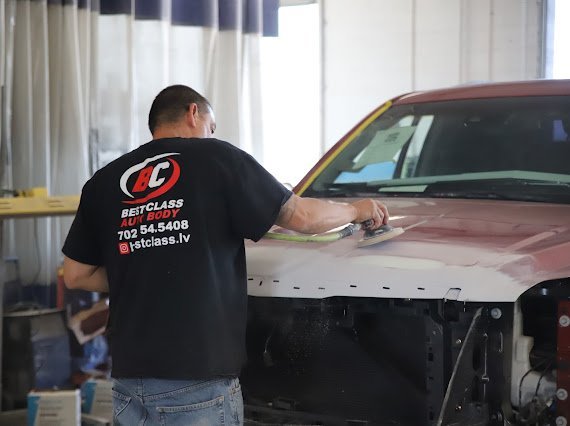
Paint correction - professional machine polishing - can restore gloss and remove oxidation from clear coat that has degraded but not yet failed. If your vehicle's paint looks dull or hazy but is not yet peeling, a paint correction service may restore the appearance without full panel refinishing. Once the clear coat is flaking or the color layer is visibly oxidized, panel refinishing is required. A free estimate at Best Class Auto Body in Las Vegas at 5267 E Cheyenne Ave will tell you which situation applies to your vehicle. Call (702) 754-5408 or stop by.
Related Services at Best Class Auto Body: